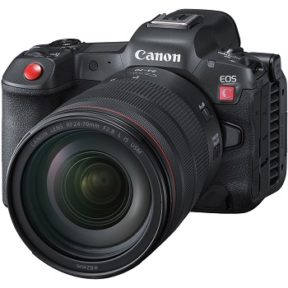
 The Canon EOS R5C was recently announced and it seems like it is a huge surprise to most filmmakers, videographers, cinematographers, content creators, or whatever you may be calling yourself these days. Many thought it was simply going to be the Canon R5 rebadged as a ‘C’ version with some different firmware and a way to stop it from over-heating while shooting video. And yes, those two things are true, but this camera is a bit more than that. And at the time of writing this, it is only $4,499. Click here for current pricing. The following are some of the stand-out features of this camera and the one huge thing that makes it very unique. Of course there are always cons. There truly is no perfect camera, but we will take a look at those things as well.
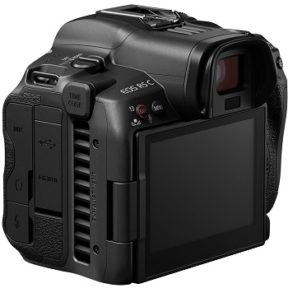 The Canon R5C is a bit deeper than the original R5 to allow for a cooling fan, so that 8k, 5.9k, 4k or whatever resolution you choose to shoot in will not overheat. Not only that, but there are no record limits to your video at all. Feel free to record until your card is filled or your battery runs out. The fan is not loud and you can control the intensity of the fan or leave it on auto. Also despite the vents, the Canon R5C is still moisture and dust resistant.
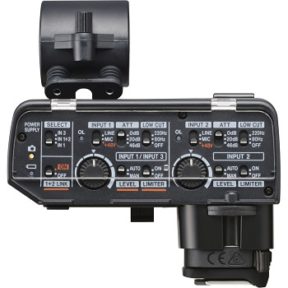 There is a headphone jack and 3.5mm mic jack that are built into the camera, but along with that there is a hot shoe that will allow you to attach the Tascam CA-XLR2d-C XLR Microphone Adapter Kit. This adapter gives you two xlr inputs with access to 48v phantom power. The adapter only uses two AA batteries. This is a good thing because it isn’t drawing power from the camera. We’ll talk about battery limitations a little later
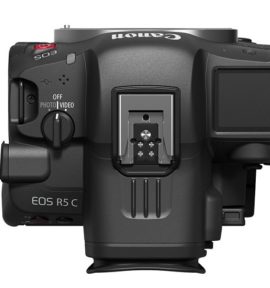 And here it is….this is by far the coolest feature about this camera. It has a toggle for video and photo mode. I know… queue the “Price Is Right” loser horn. You’re probably thinking, “That isn’t a big deal other cameras have a dial for video mode and then the several other photo modes.” Yes, that’s true, but they don’t truly work like the Canon R5 C. This camera when switched to video will only have button functions and menu options that are used specifically for video. I can’t tell you how many mirrorless cameras I have used that have convoluted menus that contain both video settings and photo settings crammed in. It makes it so difficult to find things depending on what you are doing. If I am shooting video, I don’t want to control my picture bracketing settings, nor do I want to control my flash settings. Or if I am shooting video, I don’t want to mess with my audio controls or adjust whether I am shooting 4:2:2 or 4:2:0. I think this is a great feature that will make the camera a lot more user friendly. And on top of that you have a power house camera that can shoot in 8k for video and up to 45MP for photos. Alright now that we’ve talked about the good stuff. Let’s talk a bit about the bad stuff.